General engineering degree
Integrated Master
Since 1925, EPF’s General Engineering course has provided future engineers with qualities greatly appreciated in the business world: open-mindedness, cultural mobility, and the ability to adapt to their first job and throughout their career. EPF thus trains general engineers who have a global and cross-disciplinary outlook on their profession, and who can easily adapt to market needs.
ParityLab
EPF announces the creation of a new pathway to the general engineering degree, reserved exclusively for women: the ParityLab program.
This non-competitive selection process will identify the skills expected of a female engineer through three components: review of academic records, a group simulation exercise, and a discussion with a member of the EPF team.
In addition to the degree program, a specialized training track dedicated to women is being implemented, focused on career integration.

Course program

During their first three years, engineering students will learn to master technological tools and acquire the polytechnic, scientific and human skills that will form a solid foundation of competencies, essential for their future professional missions.
Starting in the third year, the goal of the transdisciplinary program is to develop the identity of an EPF engineer by promoting a “systems approach” that, with the support of professional tools, guides students’ training in industrial design methods.
To help them reach their full potential, students receive personalized support to maximize their chances of success: academic coaching, peer tutoring, and individual guidance from the academic advisor for their year of study. The entire program is based on innovative teaching methods in which students take an active role in their own learning, particularly through the digital platforms made available to them.
In your fourth year at EPF, you can choose to study the major of your choice, regardless of what campus you studied at for your undergraduate studies.
EPF offers five majors at its Paris-Cachan campus, one in Troyes, two in Montpellier and, from the 2024 academic year, one to come in Saint-Nazaire.
Bachelor's Level Curriculum (Admission to the 1st and 2nd Years)
Mathematics for Engineering (180 hours / 14 ECTS credits)
Including a cross-disciplinary project in mathematics and digital technologies
- Transition from High School to Higher Education
- Engineering Mathematics
- Mathematical Tools
Sciences (220 hours / 14 ECTS credits)
- Physics
- Chemistry
- Life Sciences and the Environment
- Life Sciences and Health
Technology and Engineering (180 hours / 10 ECTS credits)
- Complex Systems Engineering
- Engineering Design Process (including 3D Modeling with CATIA)
- Digital Technologies (120 hours / 11 ECTS credits)
- Digital Literacy
- Algorithms
- Programming (Python)
- AI Applications, Environmental Impact, and Critical Thinking
Humanities (130 hours / 10 ECTS credits)
- Personal Development Project
- Project to Create a Student Association (supervised by student association leaders)
- Introduction to Business
- Foreign Languages, including English
- Professional Inclusion for All: Gender Equality, including a Series of Conferences with Corporate Partners
ParityLab Program (1 ECTS credit)
- Understanding and Overcoming Gender Stereotypes
- Gender Equality in the Workplace
- Self-Awareness
- Coaching and Mentoring
- Series of Conferences with Corporate Partners
Individualized Learning Path Based on High School Specialization (30–60 hours)
- Mathematics
- Physics
- Introductory Work Placement (4 weeks)
Mathematics (160 hours / 13 ECTS credits)
- Engineering Mathematics
- Mathematical Tools
Physical Sciences (190 hours / 10 ECTS credits)
- Energy and Climate Challenges (Thermodynamics and Heat Transfer, Fluid Mechanics)
- Experiments and Simulations
- Electromagnetism
- Modern Physics
Engineering Sciences (200 hours / 13 ECTS credits)
- Engineering Design Process: From Idea to Model (Innovation and Modeling Processes, System Modeling and Sizing)
- Engineering Design Process: From Model to Prototype (Control Systems, Electronics, and Prototyping)
- Year-Long Engineering Project: Design and Manufacturing of a Vehicle, Robot, or Wind Turbine, Using Recycled Materials and Minimizing the Carbon Footprint. Simulation Using CATIA and Dassault Systèmes Software
Digital Technologies (120 hours / 10 ECTS credits)
- Digital Literacy
- Object-Oriented Programming
Humanities and Social Sciences (160 hours / 11 ECTS credits)
- Introductory Internship
- Corporate Law
- Intellectual Property Law
- Civic Engagement Program
- Communication Skills Training
- Foreign Languages
ParityLab Program (20 hours / 1 ECTS credit)
- Understanding the Business World and Building Your Career Path
- Understanding and Developing Soft Skills
- Mentoring and Women's Career Paths
- Gender Equality Advocacy for the Presidential Elections
- Partnerships with Organizations Promoting Women's Representation in Engineering and Company Visits
Civic Engagement Program
- Online Learning Path, including the "Ecological and Social Transition" MOOC
- Community Engagement Internship (4 weeks)
Sensors and Measurement Systems (70 hours / 5 ECTS credits)
- From Measurement to Digital Data
- Information Transmission
Control Systems (60 hours / 5 ECTS credits)
- Energy Conversion (Flipped Classroom Approach)
- System Control
Systems Design (80 hours / 5 ECTS credits)
- Systems Engineering
- Systems Design Project
Research and Innovation (50 hours / 6 ECTS credits)
- Introduction to Research Methods (including Laboratory Immersion)
- Advanced Scientific Studies
International Management and Resource Management (230 hours / 15 ECTS credits)
- Personal Development, Ethics, and Voltaire Certification
- Elective Courses (Astronomy, Engineering and Health, Design, Artistic Creation, Introduction to Quantum Physics, Engineering and Theater, Gender Equality in the Workplace, Climate Change, etc.)
- Introduction to Business (e-Portfolio, Foreign Languages, Project Planning)
- For the FISEA Track: Preparation for Work-Study Training (30 hours)
Modeling and Simulation (90 hours / 7 ECTS credits)
- Numerical Methods
- Thermal and Mechanical Design and Sizing
Simulation and Validation (70 hours / 6 ECTS credits)
- Thermal Design and Sizing Study
- Mechanical Design and Sizing Study
Data Management and Analysis (90 hours / 6 ECTS credits)
- Data Processing Methods and Tools (Artificial Intelligence, Databases, and Power BI)
- Applied Statistics
- Information Security
- Digital Sustainability Workshop
Challenge Project (90 hours / 5 ECTS credits) - Healthcare, Digital Technologies, Construction, Thermal Engineering, Entrepreneurship, Startup Immersion, Drone Design, etc.
The 10 program majors










International
The school attaches great importance to the international dimension in the training of EPF engineers, as well as on its campuses. Students have the opportunity to take part in international mobility programs, giving them an unforgettable experience and adding an international dimension to their studies.
This experience is complemented by the learning of two compulsory modern languages.
- MSc in Germany - Hochschule Karlsruhe
- Msc in USA - Georgia Institute of Technology (Atlanta & Lorraine)
- MSc in Quebec - Université du Québec à Chicoutimi Université de Sherbrooke
- State Diploma in Industrial Engineering in Spain - Escuela Técnica Superior de Ingenieria de la Universidad del Pais Vasco
- Master's degree in Architectural Engineering in Belgium - Université de Liège
- Diploma in Engineering in Colombia - Universidad EIA
- MSc in Ireland - University College Dublin
Application for french students
Application via Parcoursup: Select the Concours Avenir and EPF campuses.
Concours Avenir:
- Step 1: Application review to identify the top-ranked candidates (the best dossiers that will be admitted without taking the written exams).
- Step 2: Top-ranked candidates are exempt from the written exams. For all other candidates, written exams include: mathematics + a scientific subject (Biology, Physics-Chemistry, Digital Technologies or Engineering Sciences) + English.
- Step 3: Admission offers on Parcoursup between May and July. Admitted candidates must confirm their choice with a “definitive Yes” and will not retain a place on the waiting list in order to enroll at EPF.
Joining the 1st year
Applications are open to students in 1st year of : Math sup, PASS-LAS, Engineering school, L1 (Maths, SVT, MIAS, Informatique, MASS, santé), BUT1 (MP, GMP, GTE, Chimie, Informatique)
- Application via Parcoursup: select Concours Avenir and EPF campuses.
- Concours Avenir :
Stage 1: file review to determine the top-ranked candidates (the best applications, who will be admitted without sitting the written exam)
Stage 2: Oral test (top-ranked candidates are exempt from interviews)
Stage 3: admission proposal on Parcoursup between May and July. Admitted candidates must confirm their choice with a “definitive yes”, without keeping a waiting list, in order to enroll at EPF.
Joining the 2nd year
Applications are open to students in 1st year of : Math sup, PASS-LAS, Ecole d'ingénieurs, L1 (Maths, SVT, MIAS, Informatique, MASS, santé), BUT1 (MP, GMP, GTE, Chimie, Informatique) having validated their 1st year.
Please note that admission to 2nd year is conditional on obtaining 60 ECTS credits and the necessary prerequisites.
Registration on AvenirPlus and selection by EPF (€100 application fee, €40 for scholarship holders)
- Period 1: January 10 to March 22 (except for engineering school students)
- Period 2: March 23 to May 24 (except for engineering school students)
- Complementary phase: from May 25
Full review of application,
Oral tests for eligible candidates over half a day (a slot to be chosen on the platform),
Results
- Period 1: April 18
- Period 2: June 20
Complementary phase: on an ad hoc basis from July 1, depending on remaining places.
AvenirPlus is open to students already in higher education or holders of a high school diploma (baccalaureate) wishing to join a school in the first, second, third, or fourth year, depending on their current studies.
- Joining in the 1st year: Math sup, PASS-LAS, engineering school, L1, BUT 1 (MP, GMP, GTE, Chemistry, Computer Science, etc.)
- Joining in the 2nd year: Math sup, engineering school, L1, BUT 2 (GTE, ATS specialization after BUT or BTS CPI or CRSA)
- Joining in the 3rd year: L2, engineering school, BUT 2
- Joining in the 4th year: L3, engineering school, M1
AvenirPlus 2024 Competition Schedule
- Registration on AvenirPlus and selection of the EPF (application fee of €100, €40 for scholarship students)
- Phase 1: From January 12 to March 21 (except for students in engineering schools)
- Phase 2: From March 22 to May 23
- Complementary phase: Starting from May 24
- Complete dossier review,
- Oral exams for admissible candidates in a half-day session (choose a time slot on the platform)
- Results:
- Phase 1: April 12
- Phase 2: June 14
- Complementary phase: Ongoing from July 1
Tuition (for the 2026 academic year) and program details:
- Cachan and Montpellier campuses: €10,180
- Troyes and Saint-Nazaire campuses: €9,160 in the 1st year,
- €9,928 in the 2nd and 3rd years
- €10,180 in the 4th and 5th years
Tuition is covered by the company in the 4th and 5th years for students on an apprenticeship contract.
Graduation rate: 99.4%
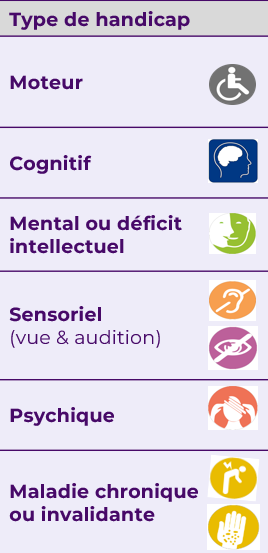
EPF is committed to the inclusion and diversity of its students.
Careers & job opportunities
EPF general engineers fit into all lines of business. Depending on their chosen major, graduates can develop in their area of expertise and will evolve throughout their career, thanks to their solid scientific training.
Discover all the job opportunities for each major on the relevant pages.
EPF engineers take on a wide variety of roles and evolve throughout their career. Project Manager then Project Director, Research Engineer in different departments, Research and Development Engineer, Industrial Engineer, Business Engineer, Maintenance, Operations, Supply Chain, Design, Project Management Assistance, Risk Control and Management, Quality Control, etc.
Discover all the professions for each major on the relevant pages.